Buddhist symbols
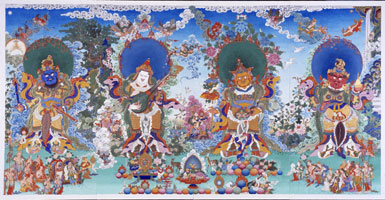
Four Guardian Kings – In the Buddhist faith, the Four Heavenly Kings are four guardian gods, each of whom watches over one cardinal direction of the world.
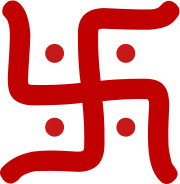
Swastika – In the Buddhist tradition, the swastika symbolizes the feet or footprints of the Buddha and is often used to mark the beginning of texts. Modern Tibetan Buddhism uses it as a clothing decoration. With the spread of Buddhism, it has passed into the iconography of China and Japan where it has been used to denote plurality, abundance, prosperity and long life.

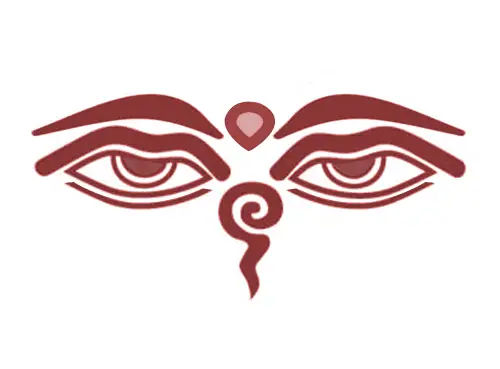
Buddha Eyes – Also called Wisdom Eyes, this pair of eyes can usually be found depicted on all four sides of the Buddhist shrines known as Stupas. The symbol denotes the all-seeing and omniscient eyes of Buddha and is representative of the Lord’s presence all around. The curly line below the eyes in the middle (where the nose is on a face) is the Sanskrit numeral one that symbolizes the unity of everything and also signifies that the only way to attain enlightenment is through Buddha’s teachings. The dot between the eyes is indicative of the third eye, which represents spiritual awakening.
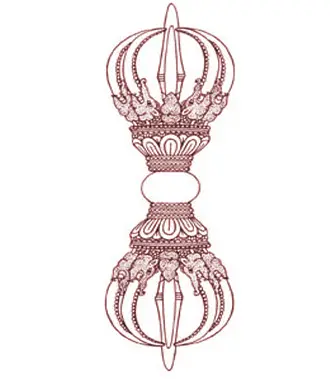
Vajra -The Vajra is a Buddhist tantric symbol representative of great spiritual power and firmness of spirit. It symbolizes one of the three main branches of Buddhism, Vajrayana. Shaped like as club having ribbed spherical heads, the Vajra is symbolic of the attributes of a diamond (purity and indestructibility) as well as the properties of a thunderbolt (irresistible energy). It also represents endless creativity, skillful activity, and potency. In Tibetan Buddhism, the Vajra is also a ritual tool and is known as Dorje. It is used along with a bell by lamas and other practitioners of sadhana.

No comments:
Post a Comment